We Are The Changelings. We Are Not Like Other Rats.
The Amazing Maurice and His Educated Rodents“We Are The Changelings. We Are Not Like Other Rats.” names a thought through which Dangerous Beans’s companions understand themselves as more than an ordinary mass of rats. It joins a claim of difference to a practical challenge: fear can scatter a crowd, but shared identity and coordination can make the Clan act with purpose.
Meaning and Origins
The thought is presented as one of Dangerous Beans’s Thoughts, and Peaches hopes she could make Hamnpork understand it. The thought’s meaning is stated directly: “We Are The Changelings. We Are Not Like Other Rats.” It gives a name to the rats’ altered identity rather than treating them as merely ordinary animals.
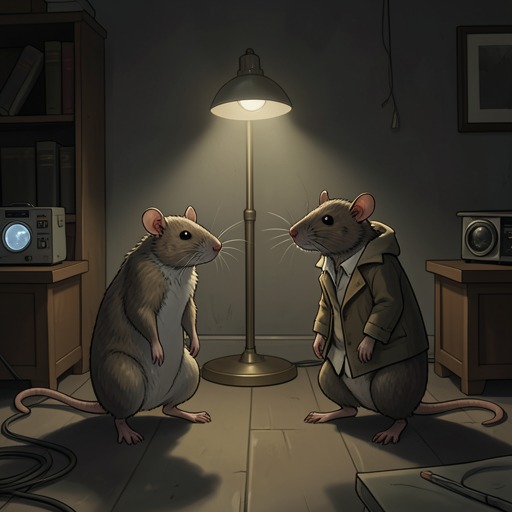
The idea takes material form in Dangerous Beans’s defense of a candle flame. Hamnpork objects that darkness was good enough for their parents and that the candle wastes food. Dangerous Beans answers that the rats must learn to control fire: by making a flame, they declare that they are separate, are not just rats, and are the Clan. The flame is therefore both a practical skill and a sign of collective identity, set against the darkness that younger rats have begun to fear.
Identity Under Pressure
The thought’s claim of difference is tested when frightened rats rush past Peaches and Dangerous Beans. One squeals, gibbers, and runs on; Dangerous Beans recognizes that they have forgotten how to talk. The scene shows fear undoing not only composure but also the very capacity that marks the Changed as distinct. Peaches gathers her notes as she and Dangerous Beans try to understand what has terrified them.
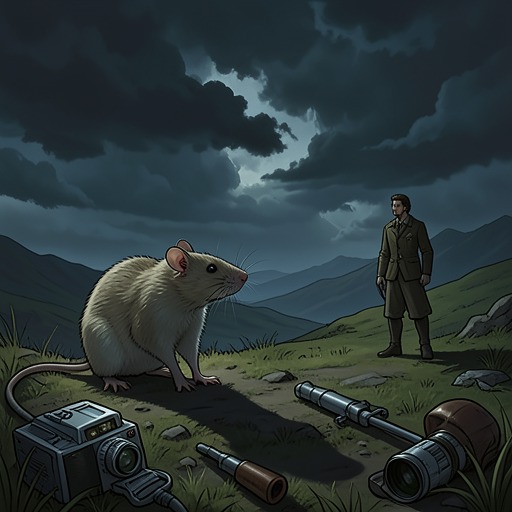
Maurice explains another collapse of collective capacity to Darktan through the example of rat-coursing. When rats are shut into a ring with terriers, they mostly run around rather than fight. Maurice distinguishes an individual rat, which can think and be brave, from a panicked crowd that becomes one mindless animal. The episode makes the phrase “not like other rats” a demanding distinction, not a guarantee: shared difference can be overwhelmed when fear takes hold.
From Thought to Coordinated Action
Darktan gives the idea a practical, urgent form when he rallies the Trap Disposal Squad. Faced with an unknown danger underground, he tells the worried rats that what is new and strong is them: rats with brains who can think and do not simply run from darkness, fire, noises, traps, or poison. He connects their courage to the image of the Dark Wood and invokes the Bone Rat, who waits for those who break and run but passes on when met with a steady gaze. The speech turns identity into a shared task: to face what hides behind their fear and go after it together.
That difference becomes visible in the Clan’s attack. The rats advance together in a line; when an enemy attacks, the formation closes over it like a fist. When terror sends the survivors fleeing, the line breaks into pairs that pursue them. The fighting ends within seconds. The contrast between a crowd ruled by panic and rats capable of coordinated action gives the thought its clearest dramatic force: being different depends not only on what the rats are, but on what they can do together.